


Garden Moths
Discover the Wild's visitors to our Garden
Garden Moths – Urban Recording in Flintshire
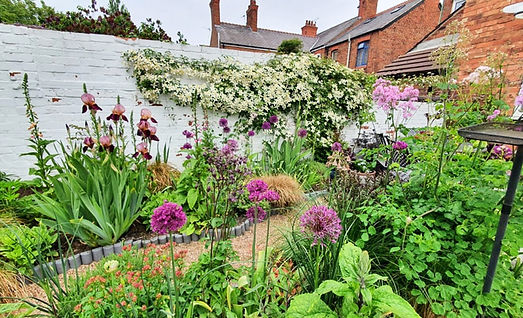
When we moved into our small mid-terraced house here in Flintshire, the back garden was little more than bricks and dandelions. It was compact, enclosed, and very much urban. Hardly the sort of place you’d expect to find remarkable wildlife. But over the years, that space has been transformed.
What began as a blank canvas has gradually become a wildlife-friendly garden designed with pollinating insects in mind — and especially moths. Every plant has been chosen with purpose. Nectar sources for the adults. Foodplants for caterpillars. Shelter from wind. Structure and layering. The aim has always been simple: create a small but functioning ecosystem in the middle of an urban landscape.

Planting for Moths
While many people plant for butterflies and bees, moths are often forgotten — despite being hugely important pollinators in their own right.
In our garden you’ll find night-scented and nectar-rich plants that come into their own after dusk. Mint and marjoram have been especially rewarding additions, not only attracting a range of generalist species but also supporting specialists such as the delightful Mint Moth, whose larvae feed within the leaves. Watching a tiny micro-moth closely associated with a plant you’ve deliberately introduced is one of the quiet joys of garden recording.
One species that has always felt particularly special here is the Common Fern Moth (Psychoides filicivora). I knew it was present locally when we first moved in, and as its caterpillars feed on ferns, it was firmly in my mind when redesigning the garden.
By deliberately planting extra Hart’s-tongue Fern (Asplenium scolopendrium), I hoped to give this subtle but beautiful moth the conditions it needed to thrive. It’s incredibly rewarding to see that decision pay off. Over the years their numbers have done well and appear to be slowly increasing.
On warm evenings they often gather and “dance” around the ferns just outside the window — and more than once I’ve found myself pausing mid washing-up to stand and watch them.

Recording in an Urban Landscape
Urban moth trapping comes with challenges — the biggest of which is light pollution.
Streetlights, security lights, neighbouring garden lighting and the general orange glow of towns all compete with a moth trap. Artificial lighting disrupts moth navigation, feeding behaviour and breeding cycles. Many species are drawn away from suitable habitat and can become disoriented, exhausted or more vulnerable to predation.
Despite this, the garden has consistently produced remarkable results.
Over the past ten years, we have recorded more than 500 species of moth in this small urban space. That number still surprises me. Five hundred species — in a mid-terrace garden.
Each year adds more. Some are common and widespread; others are migrants riding in on warm southerly winds. Some are tiny micros that require close examination and careful identification. Others are bold and unmistakable. The species list continues to grow, season by season.